Pain & mobility
Orthopedic Braces
Supportive brace requests for back, knee, ankle, wrist, and post-surgical needs — handled with a documentation-first workflow.
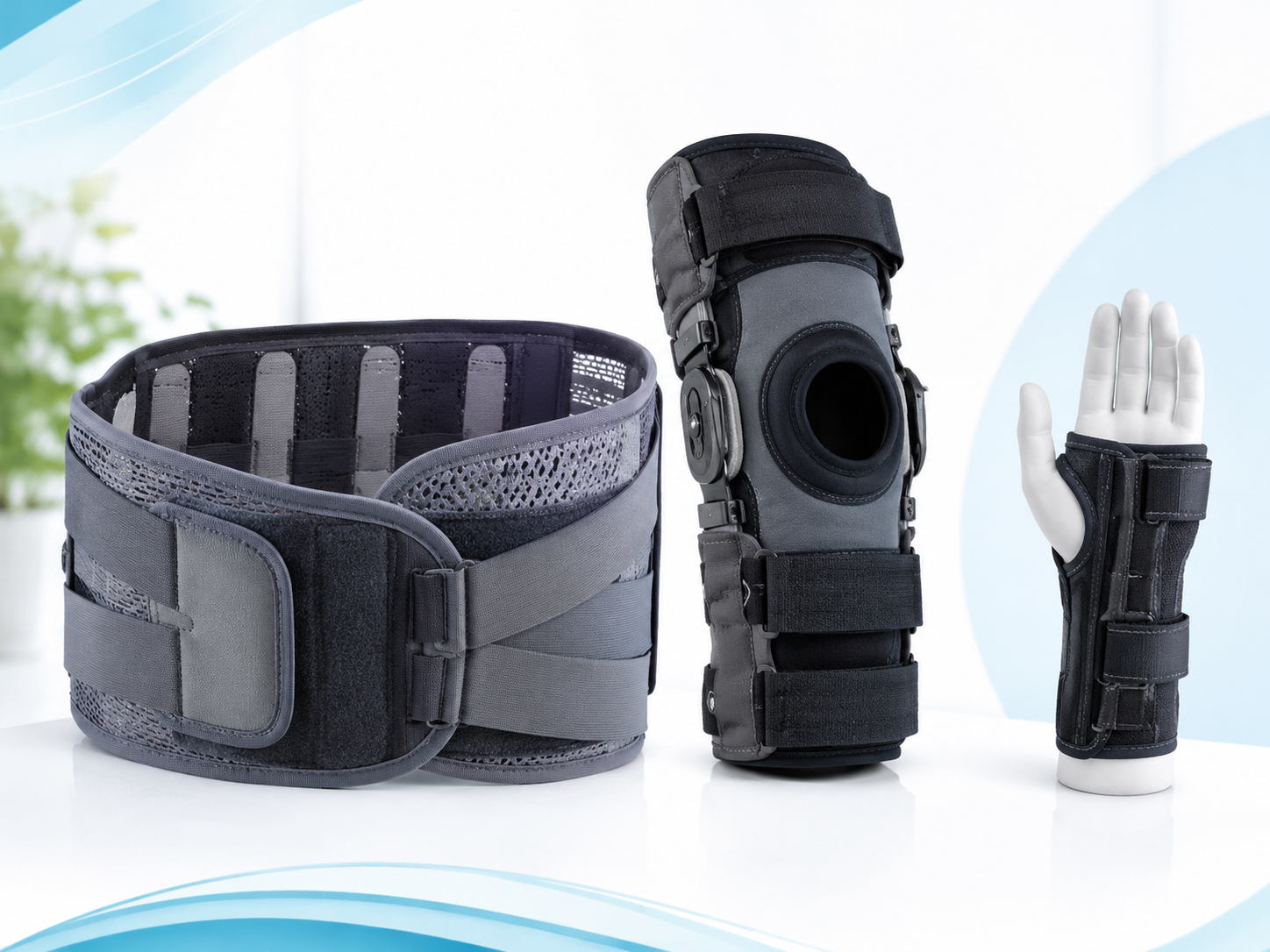
Visual example of common brace categories. Final style, brand, and sizing will vary based on the order and documentation.
Brace use guide
General instructions for safe brace use
Braces should be used as directed by the ordering provider. Fit, wear time, and activity limits can vary based on the brace type and the patient's condition.
Review the provider order and confirm which brace was prescribed.
Place the brace on the correct body area before tightening straps.
Secure straps so the brace feels supportive, but not painful or restrictive.
Check skin, circulation, and comfort after applying the brace.
Wear the brace only as instructed by the provider or product instructions.
Remove the brace and contact a clinician if numbness, swelling, skin breakdown, or worsening pain occurs.
Back braces
Usually positioned around the lower back and abdomen, then tightened evenly for support. Avoid overtightening.
Knee braces
Should be centered around the knee joint with straps secured in the correct order based on the brace design.
Wrist / hand braces
Should support the wrist without cutting off circulation or limiting finger movement more than instructed.
This section is general patient education only. It does not replace the provider's instructions, manufacturer instructions, fitting guidance, or clinical training.
How we help
A guided request, not a confusing form.
Orthopedic braces can help patients stabilize movement, support recovery, and reduce daily strain when clinically appropriate. MO Med Supply keeps the request process organized so patients and providers understand what is needed before fulfillment.
Back braces
Coordinated through a documentation-aware DME workflow.
Knee braces
Coordinated through a documentation-aware DME workflow.
Wrist and hand braces
Coordinated through a documentation-aware DME workflow.
Ankle braces
Coordinated through a documentation-aware DME workflow.
Post-surgical support items
Coordinated through a documentation-aware DME workflow.
Documentation and order review
Coordinated through a documentation-aware DME workflow.
Good fit
Who this may help
Patients with provider-directed brace needs for support or stabilization
Patients recovering after an injury or procedure when a provider recommends a brace
Providers who need a simple way to route brace orders and missing documentation
Patients who want help understanding cash-pay vs. insurance-covered pathways
Documentation
What may be needed
- Provider order identifying the requested brace and clinical need
- Recent chart notes when insurance requires medical necessity support
- Sizing or fitting information when needed for the item
- Secure insurance collection outside of the public website form
Process
How the request moves
- 1
Submit a basic request or ask your provider to contact us.
- 2
We identify the type of brace requested and what documentation is needed.
- 3
Missing order or note details are requested before fulfillment.
- 4
The coverage or cash-pay path is reviewed.
- 5
Shipment or next-step coordination is completed after review.
Questions
Helpful answers
Can I request a brace without a doctor order?+
You can start the conversation, but most insurance-covered braces require a valid provider order and supporting documentation before fulfillment.
Can braces be shipped?+
Some products may be shipped after proper documentation and sizing review. The exact process depends on the product, payer rules, and clinical requirements.
Ready to start?
Start with the basic request form. A team member will contact you before sensitive documentation is collected.